
Presbyopia—causes, symptoms, and possible treatments

Over 40 and struggling to see up close? You might be experiencing presbyopia, a common age-related vision change. The good news is, we have contact lenses that may help.

Boxes of Oasys Max, Acuvue Moist, and Oasys contact lenses.
Medically reviewed on February 23, 2026
Updated on September 8, 2026
5 minute read

Key takeaways

  • Presbyopia is a natural part of aging that starts around age 40 as the lens in your eye becomes less flexible, making it harder to focus on nearby objects
  • Common symptoms include blurry vision when looking at close objects, needing to hold reading materials farther away to see clearly, and eyestrain or headaches after doing close-up work like reading
  • Treatments may include multifocal contact lenses, monovision contacts, and prescription eyeglasses, depending on your need and lifestyle
  • ACUVUE® contacts for presbyopia have a unique pupil-optimized design to help provide crisp, clear vision

What is presbyopia?

A dark-haired woman sits on a couch reading a book to her three young girls in their living room

Presbyopia is a change to your near-vision (for example, looking at text on your phone) caused by the normal aging process of the eye. When you are younger, your eyes' lenses are very flexible, but over time, your natural lens inside your eye becomes more rigid and less flexible. Without a flexible lens, it's difficult to focus on things up close, especially in low-light situations. This typically becomes noticeable around age 40.

Take our 1-minute online presbyopia test now

ACUVUE Presbyopia Screener test image of two visible teardrops to emulate how presbyopic individuals will view the test

Are things starting to get blurry up close? Take our quick online presbyopia test—it can help determine if it's time to talk to your doctor about presbyopia.

Get contact lenses for presbyopia

Try contacts for presbyopia for free*

Provide some basic information and get a certificate for a free* trial pair

Find an eye doctor

Use our locator tool to find a doctor who can fit you with ACUVUE® contacts

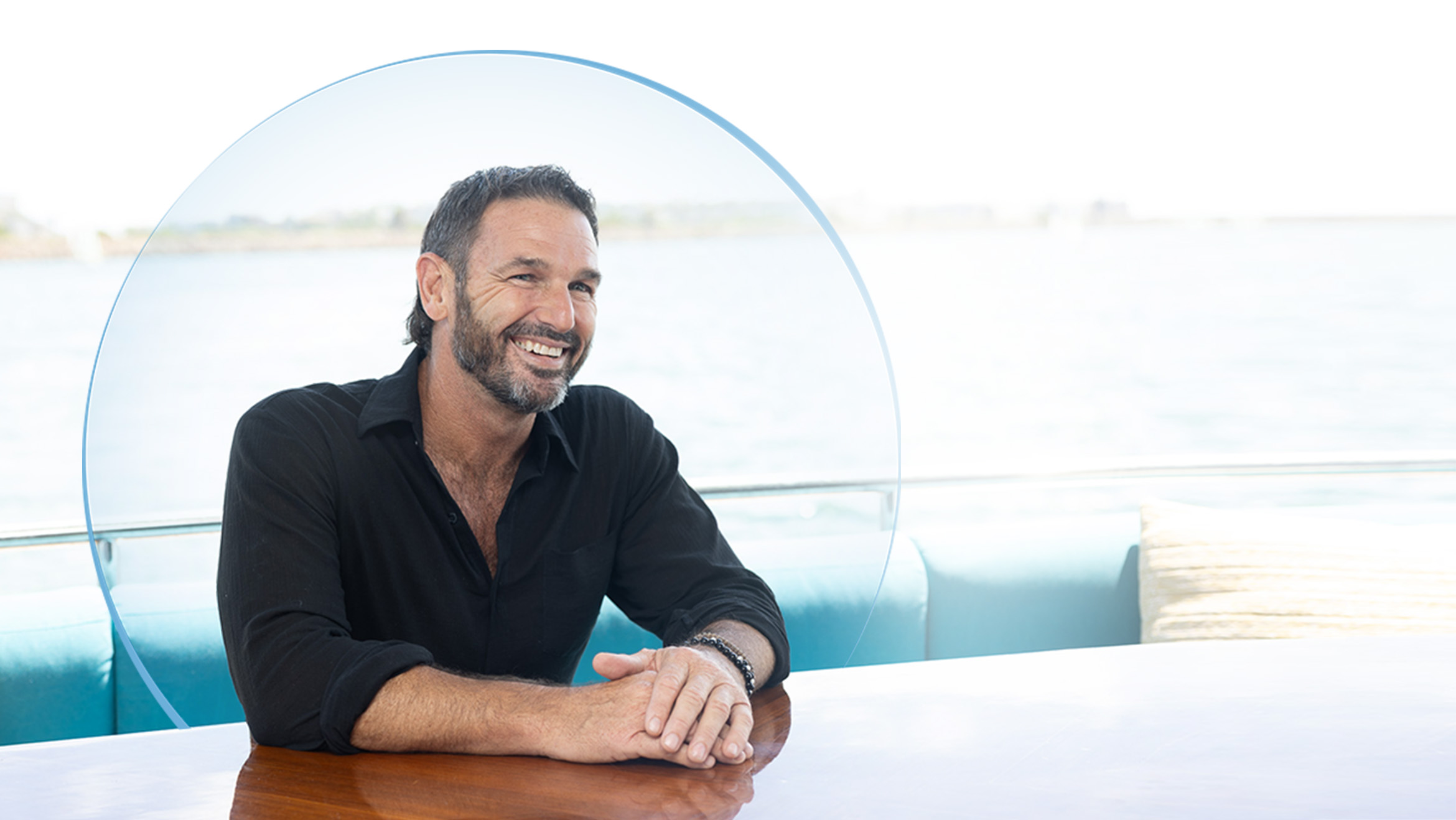
See what Captain Jason says about our contact lenses for presbyopia

"We work long hours as captains from dawn to dusk, not having to rely on glasses, but not only that, having great contacts like ACUVUE® OASYS MAX 1-Day Multifocal. I can see in these various conditions, there's a hell of a lot of paperwork that a lot of people don't understand that is in a captain's role, and then you've got to turn that straight away as you're driving a boat to you're creeping up onto some reefs, you've got some vessels coming on, you've got all the rules in the world that you've got to pay attention to and you need your eyesight for that, and then you're back down. ACUVUE® OASYS MAX 1-Day MULTIFOCAL allows me to see near, far, and in between" - Captain Jason Chambers.

Captain Jason from the television show Below Deck looking off into the distance with a smile

What are signs and symptoms of presbyopia?

The most common symptoms of presbyopia include blurry vision when reading up close, eye strain, and the need for brighter lighting. If you are experiencing presbyopia, you might notice:

  • Blurry vision in low light
  • Headaches
  • Eye fatigue
  • Eye strain after reading
  • Needing to use the light on your phone to read the dinner menu
  • Needing to increase your phone's font size to read small print

What is the difference between presbyopia, myopia, and hyperopia?

Presbyopia
Myopia
Hyperopia
Typical onset
Around age 40
Childhood
Childhood
Cause
Hardening of lens in eye
Eye too long or lens/cornea too curved
Eye too short or lens/cornea too flat
Effect
Blurry near vision
Blurry distance vision
Blurry near vision

How is presbyopia diagnosed?

Black woman eye care professional performing an exam in office with a woman with dark hair

An eye doctor diagnoses presbyopia during a comprehensive annual eye exam using standard vision tests. That said, if you are around 40 and noticing changes in your vision, you are probably experiencing presbyopia. Be sure to share your concerns with your doctor during your visit. If you need vision correction, your doctor will provide a prescription following a thorough exam.

What are your contact lens options for presbyopia?

If you’re wondering whether contact lenses can help with presbyopia, you’re in luck. Some contact lenses are designed specifically to help people with presbyopia continue to live the lifestyle they enjoy. There are a few approaches your eye doctor may recommend, including: 

  • Multifocal contact lenses
  • Monovision contact lenses
  • Single vision contact lenses with reading glasses for near vision

Why choose ACUVUE Contact Lenses for treating presbyopia?

Clear vision near and far

Seamlessly go from reading close up to seeing far away.

Optimized to your pupils

Pupil size changes with age and refraction. We account for that to provide clear, crisp vision.

Designed for all-day comfort

ACUVUE contact lenses are moisture-infused to provide exceptional comfort all day.

UV protection#^

ACUVUE offers UV blocking#^ across its entire line of contact lenses to help shield harmful UV radiation.

ACUVUE Contact Lenses made for presbyopia

Get started with ACUVUE contact lenses

Try ACUVUE for free*

Provide some basic information and get a certificate for a free* trial pair

Find an eye doctor

Use our locator tool to find a doctor who can fit you with ACUVUE contact lenses

Earn rewards

Become a MyACUVUE® member and get access to exclusive offers

FAQs

Frequently asked questions

Currently, there is no natural cure or way to reverse presbyopia. However, you can manage the symptoms with the right vision correction, such as multifocal contact lenses.

The treatment your eye doctor recommends will depend on the needs of your eyes and your lifestyle. Some possible treatments include:

  • Eyeglasses like bifocals or trifocals
  • Reading glasses
  • Contact lenses like multifocals
  • Prescription eye drops
  • Surgery


Yes! You can wear specialized lenses like the ACUVUE® OASYS MAX 1-Day MULTIFOCAL for ASTIGMATISM, which correct both conditions simultaneously.

Yes. While both conditions make it hard to see up close, presbyopia is caused by the aging of the eye's lens, whereas farsightedness (hyperopia) is typically caused by the shape of the eyeball. 

Some prescription eye drops have been developed to temporarily improve near vision in certain adults with presbyopia. They are not right for everyone and should only be used under the guidance of an eye care professional. Contact lenses, glasses, and other correction options may also be considered depending on the person’s needs.

Presbyopia is an age-related focusing change that affects near vision. Myopia, also called nearsightedness, mainly affects distance vision. Hyperopia, also called farsightedness, can also affect near vision but has a different cause than presbyopia. For more detail, users can visit the presbyopia vs. myopia and presbyopia vs. hyperopia guides.

Related Content

A woman wearing glasses sits reading a newspaper while she holds a blue coffee mug

Presbyopia vs hyperopia: What's the difference?

A brunette woman stands in front of the freezer to cool down

Vision changes during presbyopia, perimenopause and menopause

Footnotes

The information provided on this page and across the entire Acuvue.com experience is designed to offer educational insights into eye health, referencing expert advice from reputable medical and government organizations, including the American Academy of Ophthalmology, the American Optometric Association and the National Eye Institute. While we research, report, and review the content on Acuvue.com and its extended social media to deliver accurate and up-to-date vision, vision care, and vision correction information, we do not make any assurances, and content accessed on or through Acuvue.com and its extended social media is not intended to replace professional medical advice, diagnosis, or treatment of any eye conditions or health issues. This brings us to our #1 eye health tip: Always consult a qualified healthcare professional for personalized medical guidance and care.


*Free trial contact lenses available only from participating eye care professionals. Exam and fitting fees not included.

#Helps protect against transmission of harmful UV radiation to the cornea and into the eye.

^WARNING: UV-absorbing contact lenses are NOT substitutes for protective UV-absorbing eyewear such as UV-absorbing goggles or sunglasses because they do not completely cover the eye and surrounding area. You should continue to use UV-absorbing eyewear as directed. NOTE: Long-term exposure to UV radiation is one of the risk factors associated with cataracts. Exposure is based on a number of factors such as environmental conditions (altitude, geography, cloud cover) and personal factors (extent and nature of outdoor activities). UV-blocking contact lenses help provide protection against harmful UV radiation. However, clinical studies have not been done to demonstrate that wearing UV-blocking contact lenses reduces the risk of developing cataracts or other eye disorders. Consult your eye care practitioner for more information. 


Reward amount dependent on ACUVUE® product and quantity purchased and if you are a new wearer. Must get an eye exam and purchase from participating provider. Original receipt required. Valid thru 12/31/26. 


Rewards paid in the form of an ACUVUE® Prepaid Mastercard®. Use your card everywhere Mastercard is accepted in the U.S. issued by The Bancorp Bank, Member FDIC, pursuant to license by Mastercard International Incorporated. Mastercard is a registered trademark, and the circles design is a trademark of Mastercard International Incorporated. Your use of the prepaid card is governed by the Cardholder Agreement, and some fees may apply. This is not a gift card. Please note that prepaid cards are subject to expiration, so pay close attention to the expiration date of the card.

2026PP09746